

ADHD-Friendly Consistency Tips for Cam Models

Minimum goal
Standard goal
Stretch goal
One short shift or one prep task
A planned full shift with breaks
Extra time online, clips, admin or content planning
Consistency can feel tough when ADHD turns every small task into a moving target.
One day a cam shift feels exciting and easy to start. The next day, the same routine can feel impossible because the lights are annoying, messages are distracting, time has disappeared, or motivation has checked out.
For ADHD cam models, consistency does not have to mean forcing a rigid schedule.
Consistency in ADHD means building a flexible system that protects focus, supports energy, and makes it easier to show up in ways that feel realistic and achievable.
Disclaimer: This guide is informational only and is not a substitute for medical or mental health advice. If ADHD symptoms are affecting your daily life, please seek support from a qualified medical professional.
SIMPLE ROUTINE
ADHD often makes transitions feel harder. Starting a task can take more energy than the actual work itself.
A routine helps because it removes some of the “What do I do now?” pressure.
Keep your cam routine simple enough to repeat on low-energy days. Think in stages rather than strict rules.
A helpful pre-cam routine might look like this:
Check your basic setup... Lights, camera, mic, water, charger and any comfort items.
Choose one focus for the shift... For example, staying online for a set time, greeting new viewers, or keeping energy steady.
Do a short body reset... Stretch, breathe, put on your favourite music, or walk around your home for a few minutes. If you have an outdoor space such as a garden or a terrace, use this and take some fresh breaths of air outside.
Start with a familiar opening... Use a greeting, playlist, outfit style or room setup that helps signal to yourself - “right now, I am working”.
The goal is not perfection here. The goal is less pressure.
If a full routine feels too much, create a “minimal start” version. This could include something as small as turning on your lights, filling a water bottle and setting a timer.
A routine also helps after a shift. Many cam models with ADHD struggle to stop, decompress or deal with admin.
Try a short end routine too, for example:
Save any notes you need for next time.
Put away equipment.
Send follow-ups to your most supportive fans.
Eat something and drink water.
Do one calming activity before switching into personal time.
This creates a clear boundary between work mode and rest mode.
TIME BLOCKS
Long, open-ended work sessions can be stressful when attention span is prone to fluctuate. Time blocks make the day ahead easier to see and easier to start.
Instead of saying “I will cam all evening,” try setting yourself more specific time blocks:
30 minutes to get ready.
90 minutes online.
15 minutes break.
60 minutes online.
20 minutes wind-down.
This gives your brain clear edges. It also helps prevent time blindness, which is common with ADHD.
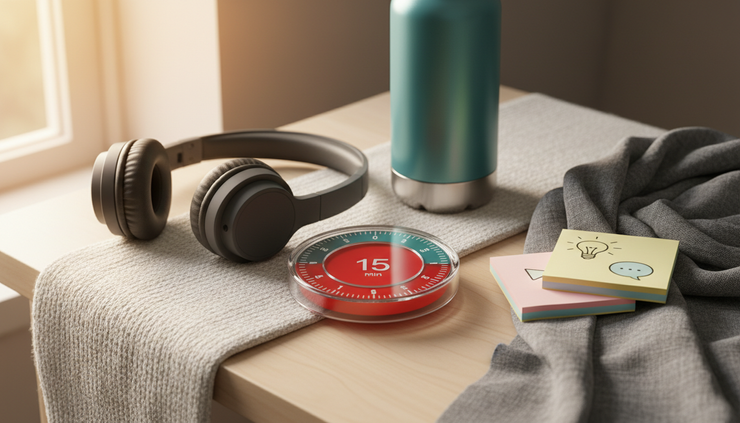
Timers can help, but choose ones that do not feel punishing.
For example, a loud alarm may raise stress; but a visual timer, gentle chime or vibrating phone reminder may feel less harassing.
Try these ADHD-friendly time tools:
Body doubling
Work at the same time as someone else, even virtually. This could be a trusted friend doing their own task while you prepare for your shift. The quiet presence can help you begin.
Anchor habits
Attach a task to something you already do. For example, after making tea, you check your cam setup. After brushing your hair, you start your playlist.
The two-minute entry point
If you feel stuck, agree to do only two minutes. Open the site, adjust one light, or put on one part of your outfit.
Starting small often lowers resistance.
Breaks with a clear return point
Breaks are important, but ADHD can make them stretch longer than planned.
Before stepping away, decide exactly what “returning” means. For example: “When the timer rings, I sit back in the chair and switch on my stream.”
FLEXIBLE, REALISTIC AND KIND GOALS
Consistency breaks down when goals are too vague or too big.
“Be more consistent” - gives no direction.
“Cam four nights every week, no matter what” - may be too rigid, especially if energy levels, health or lifestyle changes.
Flexible, realistic and kind goals might include:
Commit to going online just twice a week for a short, planned time. Any more you can do, is a win!
Prepare outfits or props the day before, to remove this burden from the camming day.
Writing three simple notes after each shift to highlight your achievements or goals.
Track which times feel best for your energy and adjust schedule accordingly.
Take one full rest day per week without checking "work" messages (i.e., totally disconnect from the camming environment).
Track your natural patterns without judging yourself. You might notice that certain foods, sleep times, room temperature, music or message volume affect your focus. This information is useful, not a reason to criticise yourself.
Use a jotter to track your patterns, remember things, make notes to help you brainstorm, doodle or just dump what's on your mind.

MANAGE DISTRACTIONS
Distraction is not a character flaw. ADHD brains often notice everything, especially when the environment is busy or emotionally loaded.
Cam work can involve chat, sound, visuals, performance, tech and self-monitoring all at once. That is a lot.
Start by reducing sensory clutter:
Keep only the items you need within reach.
Put your phone on silent mode if you do not need it for your cam sessions.
Use a simple background that does not pull your attention.
Keep water, snacks and comfort items nearby.
Close tabs on your computer that are not part of the camming session.
If chat becomes overwhelming, use simple scripts. You do not need to invent a fresh response every time.
Prepare phrases for common moments, such as greeting viewers, setting boundaries, redirecting unreasonable requests or taking a break.
Examples:
“Hey how are you? Let me know what you're into!”
“I’m taking a quick break and I’ll be back in five!”
“That request is not for me, but you're welcome to chat if you stick to the site rules.”
Basic scripts protect energy. They also help you hold boundaries when your brain feels overloaded.
It can also help to make a “distraction parking spot”.
This is another great reason to keep a jotter and pen close by, or a digital notebook open for thoughts that pop up during camming!
If you suddenly remember laundry, an idea for content, or a message you need to send, write it down and return to it later.
This tells your brain, “We caught it. We do not have to follow it right now.”
MAKE SELF CARE A PRIORITY
Self-care is not a reward for being productive. It is part of staying well, especially in work that involves attention, emotion and performance.
For many people with ADHD, basic care slips when focus locks onto work or avoidance takes over. Build care into the structure, not around it.
Focus on the basics first:
Regular meals or easy snacks.
Stay hydrated by drinking plenty of water each day.
Keep alcohol and caffiene levels to a minimum.
Aim for sleep hygiene that supports your schedule.
Do movement/exercise that helps your body reset.
Take regular time away from screen.
Keep in touch with your safe people to talk to.
Mental health matters! Cam work can bring praise, pressure, boredom, anxiety rejection, excitement and overstimulation in the same week.
Give yourself space to process that. Journaling, therapy, peer support, quiet time or creative hobbies can all help.

WATCH OUT FOR BURNOUT
Burnout often starts quietly. Look out for signs such as dread before every shift, trouble sleeping, irritability, numbness, or feeling unable to stop checking work.
If those signs show up, reduce the load where you can. A shorter schedule that you can sustain is better than an intense plan that leaves you depleted.
Give yourself permission to experiment. ADHD-friendly consistency is personal.
Some people thrive with a fixed weekly schedule. Others need rotating time blocks, visual reminders, body doubling or strong rest boundaries. What works for one model may not work for another.
The most supportive plan is one you can return to after a hard day. Missed a shift? Adjust and restart. Lost focus? Use the notes you made and try again. Needed rest? That counts as care, not failure.
Consistency is not about becoming a different person. It is about building systems that respect how your brain works, protect your wellbeing, and make showing up feel possible.
Start with one small change this week, keep what helps, and let the rest go.
For more detail on how to master time management as a cam model, read here.
Learn how to set relevant profile tags to attract more fans here.


Comments